Content Creator Applications: How to Fill Out Brand and Creator Program Applications That Get Approved
What brand and creator program applications really ask for, how to answer each field honestly, a copy-and-adapt template, a one-page media kit checklist, and why most applications get ignored.

Most brand and creator program applications ask for the same five things: your niche, where your audience lives, a few sample posts, your rate, and proof your content performs. Fill those five fields with specific, honest answers instead of vague ones, and your application reads like a real creator instead of a form submission that gets skipped.
What Do Brand and Creator Program Applications Actually Ask For?
Almost every application, whether it's a short Google Form from a small business or a multi-page portal from a national brand, is trying to answer three questions: who is your audience, can you prove it, and what does it cost to work with you. That breaks down into recurring fields: your content niche, your audience's location and demographics, a handful of sample posts, your rate per deliverable, and evidence that past content actually performed (views, saves, comments, or results from previous partnerships).
Brands reviewing hundreds of applications a week skim for these fields first. If any of them are blank, vague, or copy-pasted from a template without edits, the application gets passed over, not because the creator wasn't good enough, but because the reviewer couldn't tell.
How to Answer the Niche Question Without Being Too Narrow or Too Vague
Your niche answer should name one primary category plus two supporting content pillars, not a single word and not a paragraph. "Lifestyle" tells a brand nothing. "Budget home cooking, with a focus on 30-minute weeknight meals and grocery store product reviews" tells them exactly what kind of content they'd be buying and whether it fits their product.
If you post across a few topics, pick the one that gets your best engagement and lead with it. You can mention the others as secondary, but don't list five niches and expect a brand to guess which one matters to them.
How to Answer the Audience Location and Demographics Question
Pull this straight from your own platform analytics instead of guessing. Instagram Insights, TikTok Analytics, and YouTube Studio all show a breakdown of your audience's top cities or countries and an age and gender split under their analytics or audience tabs. Screenshot the actual numbers and either paste them in or summarize them precisely ("62% US, ages 25-34, 70% female") rather than writing "mostly young women."
If a brand sells in specific regions, this field is often the first filter they apply. An honest, specific answer, even if your audience skews smaller or different than you'd like, beats a vague one that reads as unverified.
Which Sample Posts to Include (and What to Do If You Don't Have Great Ones Yet)
Pick three to five posts that show range: your best-performing post, your most recent post, and one or two that look like the kind of content you'd make for a brand like theirs. Link directly to the posts, not just your profile, so the reviewer doesn't have to go hunting.
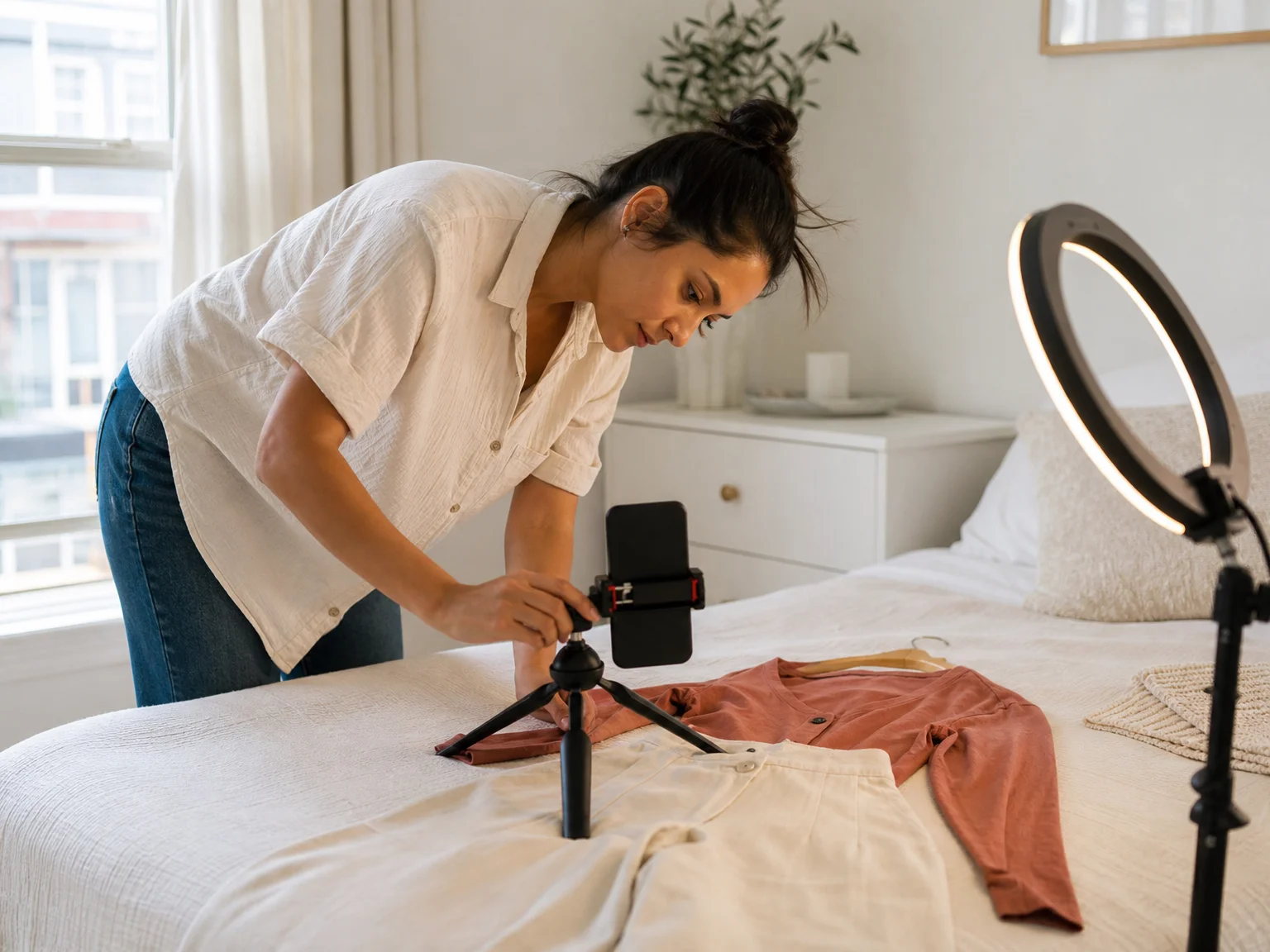
If you're newer and don't have strong samples yet, don't submit weak or outdated content just to fill the field. Shoot a few fresh examples instead. You don't need a studio or a photographer to do this: a phone, a window for light, and an outfit you already own is enough. If setting up a shoot from scratch feels like the slow part, Repfie's Replure can model your verified likeness into a scene with a chosen pose, outfit and backdrop, so you can build a quick, consistent set of sample shots without retakes.

How to State Your Rate When You're Just Starting Out
Give a specific number or range tied to a specific deliverable, not "negotiable" or "DM me." Something like "$75 for one in-feed photo post, $125 for a post plus a 15-second Reel" is a real answer a brand can plan a budget around. "Negotiable" reads as either inexperienced or unprepared, and most reviewers skip it rather than start a back-and-forth.
If you've never been paid for a partnership, it's fine to base your number on the time a post actually takes you (shooting, editing, writing the caption, posting) rather than pulling a number out of the air. Just don't write $0 or "free for the right brand": that invites brands who will never pay you for anything.
How to Show Past Results With Few or No Past Brand Deals
If you don't have a paid partnership case study yet, use organic performance as your proof instead. Saves, shares, comment quality, and watch-through rate on your own content tell a brand how your audience actually responds, which is often more useful to them than a vague "brand X loved working with me" line.
One thing that quietly sinks applications: brands can usually tell when follower counts don't match engagement, and it makes them question whether an audience is real. A verified profile removes that doubt before it comes up. Repfie's verified human profiles use a quick liveness check to confirm you're a real person, and any AI creation made with your likeness is signed as yours, so a brand reviewing your application isn't left guessing whether the account behind the numbers is real.
Copy-and-Adapt Application Template
Use this as a starting point and fill in your own specifics. Don't submit it word for word to multiple brands: edit the brand-fit line every time.
Name / handle: [Your name], [@handle] on [platform] Niche: [Primary category] with a focus on [two supporting content pillars] Why this brand: I already use/love [specific product or category] because [one honest reason], and my content on [topic] would fit naturally with [what they make]. Audience: [Platform] following of [your real number], audience is [top location %] and [age/gender split from your analytics] Engagement: Average [engagement rate or typical views/saves] on posts in this niche over the last [30/60/90] days Sample posts: [Link 1], [Link 2], [Link 3] Deliverables I can offer: [e.g., 1 feed post, 2 Stories, 1 Reel] Rate: $[amount] for [specific deliverable]; $[amount] for [bundle] Availability: Can deliver within [timeframe] of product receipt or brief approval Contact: [Email], [media kit link if you have one]
One-Page Media Kit Checklist
A one-page media kit backs up everything your application claims, and a reviewer can scan it in under a minute. Include:
- Your name or brand, handle, and primary platform
- A one-line bio stating your niche and content style
- Follower count and average engagement rate, pulled from your own analytics
- Audience location and age/gender breakdown (screenshot or summarized numbers)
- Three to five of your best content examples, linked or embedded
- Deliverables you offer and your rate for each
- Past partnership logos or results, if you have any; skip this section entirely if you don't, rather than padding it
- Direct contact info, not just a link to your bio
Common Reasons Applications Get Ignored
Most applications don't get a rejection message; they just go quiet. The usual reasons:
- The pitch is generic. No mention of the specific brand or product, just a copy-pasted paragraph sent to a long list of companies.
- No proof, just claims. "I have high engagement" with no numbers, no linked posts, and no screenshots.
- The niche doesn't match the brand. Applying to every open program regardless of fit wastes the reviewer's time and yours.
- The rate field is vague or missing. "Open to discuss" tells a brand you haven't thought it through.
- Dead or private social links. A reviewer who can't open your profile moves to the next application.
- Follower counts that don't match engagement. Even without bad intent, a mismatch raises doubt a reviewer won't ask you to clear up.
- No clear next step. End with what you're proposing (a single post, a bundle, a trial collaboration), not just "let me know if interested."
Where to Apply Once Your Materials Are Ready
Once your niche, audience numbers, samples, rate, and media kit are in order, the harder part is finding programs worth applying to and not losing hours to pitches that go nowhere. Repfie's Angelfluencer program lets you promote products and services you already love and earn a commission per sale, with no inventory or shipping to manage, and you license your verified likeness to sellers with your approval on every use. Combined with a verified human profile, the application and audience-proof work you just did carries further: sellers can see the engagement and audience numbers behind a real, checked person rather than an unverified handle.
FAQ
What information do most creator and brand program applications ask for? Most ask for the same five things: your content niche, your audience's location and demographics, three to five sample posts, your rate per deliverable, and some proof that your content performs, such as engagement numbers or past partnership results.
How do I answer the audience location question if I don't have formal analytics yet? Check your platform's built-in analytics first (Instagram Insights, TikTok Analytics, or YouTube Studio all show audience location and age breakdowns under the audience or analytics tab). If your account is brand new and has no data yet, say so honestly rather than guessing a number.
What rate should I list if I've never done a paid brand partnership? Base it on the time a post actually takes you to shoot, edit, and publish, and give a specific number tied to one deliverable, such as a single feed post, rather than writing 'negotiable' or offering to work for free.
How many sample posts should I include in an application? Three to five is typical: your best-performing post, your most recent post, and one or two that resemble the kind of content the brand would want, linked directly rather than just pointing to your profile.
Why do creator applications get ignored without any rejection message? The most common reasons are a generic pitch with no mention of the specific brand, missing proof like engagement numbers or linked samples, a mismatched niche, a vague or missing rate, and dead or private social links.
What's the difference between a creator application and a media kit? An application is the form or email you submit for one specific opportunity. A media kit is a one-page reference document with your niche, audience numbers, sample content, and rates that you can attach to any application or pitch without rebuilding it each time.
Show up as the real you
Repfie is the social platform where every profile is a verified, real person. Share your best shots, grow a following that trusts you, and earn from real recommendations.
Join Repfie free →